
You’ve committed to hosting. The date is set, the guest list is growing, and now the reality hits: there are a hundred moving pieces, the weather is unpredictable, and you want people to actually enjoy themselves—not just show up, sweat, and leave early.
Summer parties look effortless when they’re done right, but behind every smooth event is a host who planned backward from the guest experience, not forward from their own to-do list. This guide walks you through the full planning process with a realistic timeline, organizational systems that actually work, and the contingency thinking that separates stressful events from memorable ones.
By the end, you’ll have a framework that handles the details without micromanaging them—and a clear sense of what needs your attention versus what can run on autopilot.
What You’ll Learn
Which type of host are you?
The List-Maker
You love structure and want a clear checklist that covers everything from invites to cleanup. You need a timeline that tells you exactly what to do when.
The Experience Creator
You care most about the vibe—how the space feels, whether guests are comfortable, and if the activities actually create moments. You need flow planning, not just task lists.
The Contingency Planner
You’re calm until you think about what could go wrong—weather, food safety, guest injuries. You need backup systems that let you relax and enjoy your own event.
Creating a Realistic Event Timeline That Doesn’t Overwhelm You
The difference between a chaotic party and a smooth one isn’t effort—it’s when you apply that effort. Most hosts either start too late and panic-plan, or start too early and burn out before the event even begins.
A functional timeline works backward from the guest arrival time and clusters related tasks together so you’re not jumping between unrelated decisions. It also builds in buffer days for the things that always take longer than expected—like assembling rental equipment or coordinating with vendors.
Core Decisions
Set date, finalize guest count estimate, choose party type (casual cookout vs. structured event), and book any rentals or entertainment that require advance reservations.
Invitations & Logistics
Send invites (digital or physical), plan menu, order or reserve supplies, confirm rental delivery times, and map out your yard or event space layout on paper.
Procurement & Prep
Buy non-perishables, confirm final headcount, prep activity stations, arrange for extra seating or shade structures, and check weather forecast trends.
Final Setup & Food
Shop for perishables, set up tables and activity zones, receive and test rentals, prep any food that can be made ahead, freeze extra ice, and charge all devices.
Execute & Adjust
Set out food 30 minutes before guests arrive, do a final walkthrough for safety hazards, fill drink coolers, turn on music, and give yourself 20 minutes to shower and reset before anyone shows up.
⚠️ Common timeline mistake: Trying to do everything the day before. Exhausted hosts create tense parties. Spread physical setup across two days, and protect the morning of your event for rest and troubleshooting—not assembly work.
Setting Up Your Space for Flow and Comfort
Most outdoor party layouts are designed for the host’s convenience—coolers near the door, food on one table, seating in a cluster. That setup forces guests to navigate the same chokepoints over and over, creates congestion, and makes people feel like they’re interrupting your workflow when they need something.
A better system creates stations that let guests self-serve without asking questions, keeps high-traffic areas open, and separates activities by noise and movement level so families with toddlers aren’t competing with yard game players for the same space.
The Four Core Zones Every Summer Party Needs
🍽️ Food & Drink Station
Position away from activity zones. Use a long table with food at one end, drinks at the other. Include serving utensils, napkins, and a small trash can within arm’s reach. Keep it shaded.
Spacing tip: Leave 3 feet of clearance on the access side so people can serve themselves without bottlenecking.
🎯 Activity Zone
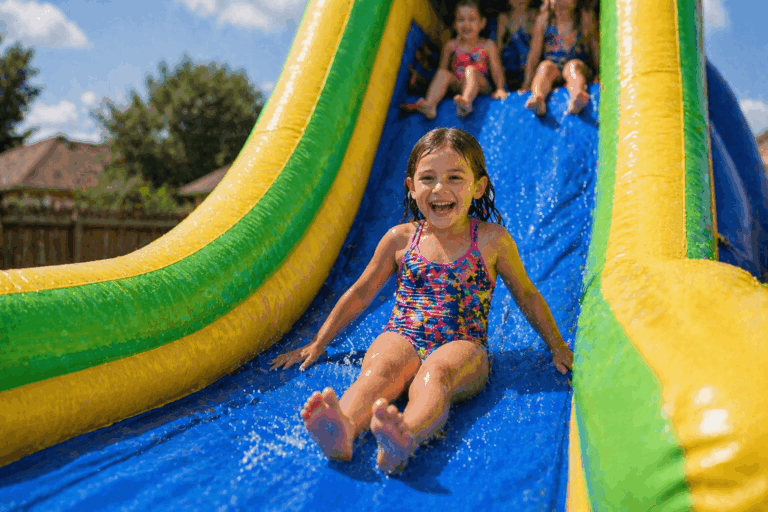
Water slides, games, or sports equipment belong in open space with visual supervision. Fence off or mark boundaries if you’re near driveways, pools, or other hazards.
Safety buffer: Keep active play 15+ feet from seating areas and food tables.
🪑 Seating & Conversation Area
Cluster chairs and benches in shaded zones with side tables for drinks. Arrange seating in small groups (4-6 chairs) rather than long rows. Adults will migrate here between activities.
Comfort factor: Provide cushions or towels for hard seating, and have a few folding chairs as overflow.
🚻 Utility Zone
Place trash/recycling bins, a cooler with backup ice, sunscreen, bug spray, and a small first-aid kit in an accessible but out-of-the-way spot. Mark bathroom access clearly if you have guests unfamiliar with your home.
Host sanity: This zone saves you from answering “where’s the trash?” 40 times.
💡 Pro tip: Walk your layout the day before and physically move through the guest flow—entry to food to seating to activity. If you’re squeezing past furniture or backtracking, your guests will too. Adjust spacing before anyone arrives.
Managing Food, Drinks, and Heat Safety Without Overthinking It
Summer heat accelerates food spoilage, dehydrates guests faster than they realize, and turns certain foods into liabilities if they sit out too long. The goal isn’t a refrigerated buffet—it’s strategic timing and smart food choices that stay safe in warm weather.
The two-hour rule is your baseline: perishable food shouldn’t sit at outdoor temperatures for more than two hours. In 90°F+ heat, that window drops to one hour. This doesn’t mean pulling food constantly—it means setting out smaller portions and restocking from coolers as needed.
What Keeps Food Safe vs. What Creates Risk
🔺 Heat Risk Foods
- Mayo-based salads (potato, pasta, chicken)
- Dairy dips and cheese platters
- Cut fruit (especially melon)
- Anything with raw or undercooked eggs
- Meat or seafood not continuously iced
Keep these items in coolers and serve in small batches.
🔻 Heat-Safe Foods
- Grilled meats served immediately
- Whole fruits (apples, oranges, bananas)
- Chips, crackers, pretzels
- Vinegar-based slaws and salads
- Packaged dips (salsa, guac) until opened
These can sit out for longer periods with minimal risk.
How Much to Serve (Real Consumption Rates)
Online guides often lowball drink estimates, especially for summer events. Guests drink 2-3x more in heat than they do indoors, and water is always the most consumed beverage—not soda or lemonade.
Per-Person Guidelines for a 4-Hour Party
- Food: 1.5-2 lbs per adult (0.75-1 lb for kids under 12)
- Water: 3-4 bottles per person (16 oz each)
- Other drinks: 2-3 servings per person
- Ice: 1-1.5 lbs per person (doubles as drink cooling and injury first aid)
- Cups: 3 per person (people lose track and grab new ones)
⚠️ Dehydration indicator: If guests stop sweating but still look flushed, they’re likely dehydrated. Have a shaded cool-down area with water readily available, and don’t hesitate to encourage breaks from sun exposure.
Planning Activities That Actually Get Used
The reality of party activities: half of what you plan will go unused, and the thing people enjoy most is usually unplanned. That’s not a failure of planning—it’s recognizing that structured activities work best as options, not obligations.
The mistake hosts make is over-programming. You don’t need an activity every 20 minutes. You need two or three high-value options that appeal to different energy levels, require minimal explanation, and can run independently without host involvement.
The Three-Tier Activity System
⚡ High-Energy Anchor
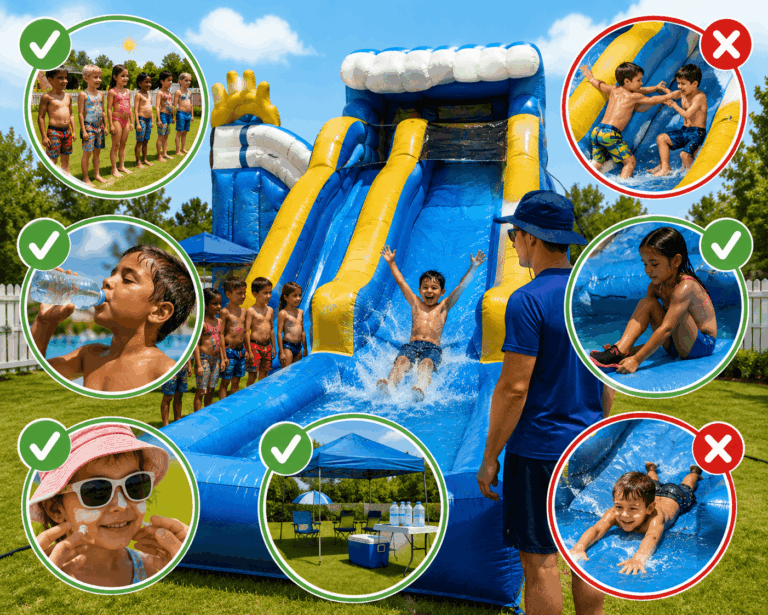
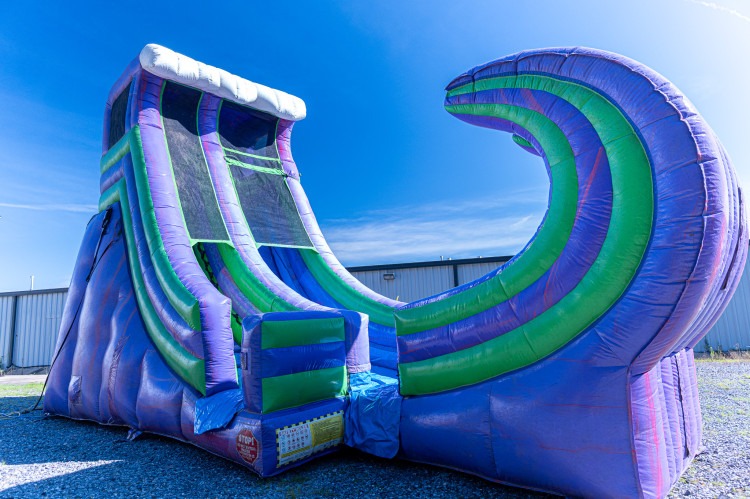
One main attraction that appeals to kids and active adults. Water slides, inflatable obstacle courses, or lawn games like cornhole or spikeball. This draws people in and creates a focal point.
Setup rule: Must be visible from seating areas for parent supervision.
🎲 Low-Key Option
Something guests can do while socializing—card games, giant Jenga, a craft station for kids. These fill lulls and give introverts or toddlers something to do without committing to high-energy play.
Engagement tip: Set these up in shaded seating areas.
🛝 Free-Play Zone
Open space with balls, frisbees, bubbles, or sidewalk chalk. No rules, no structure. Kids will self-organize, and this prevents the “I’m bored” meltdown when structured activities aren’t appealing.
Flex benefit: Adults often join in spontaneously.
For more detailed guidance on setting up water-based activities specifically, the complete water slide party planning guide walks through setup, supervision, and safety protocols that keep everyone comfortable.
💡 Timing insight: The busiest activity time is 45-90 minutes after guests arrive. Set up high-energy options early, but don’t feel obligated to start them immediately. Let guests settle in, eat, and then naturally migrate to activities.
Building in Weather and Backup Plans That Actually Work
Summer weather is predictably unpredictable. The question isn’t whether you’ll face heat, rain, or sudden storms—it’s whether you’ve built in systems that let you adapt without canceling or panicking in front of guests.
A real backup plan isn’t “we’ll move inside if it rains.” It’s knowing exactly which activities shift indoors, where guests will go, and how you’ll communicate changes if they happen mid-event. It’s also having heat mitigation strategies that don’t require air conditioning.
The Weather Contingency Checklist
3 Days Before the Event
- Check hourly forecast and radar patterns
- Identify indoor backup space or covered outdoor area
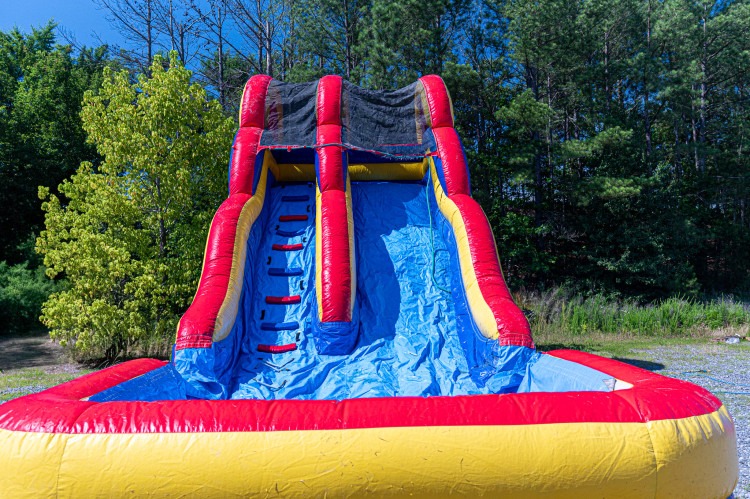
- Confirm rental equipment can handle rain (or if you need tarps)
- Have a postponement date in mind if severe weather is likely
24 Hours Before
- Send weather update to guests (even if conditions look good)
- Set up shade structures or tents in case of heat or drizzle
- Move temperature-sensitive items indoors until setup time
- Charge phone and have a weather app with radar open
Day Of
- Have towels, tarps, and bungee cords accessible for fast coverage
- Keep indoor space clear and ready if you need to pivot
- Monitor heat index—if it hits 100°F+, add shade and water breaks
- Assign one adult to watch radar during the event (not the host)
⛔ Non-negotiable safety rule: If you hear thunder or see lightning, clear outdoor activities immediately. The 30-30 rule applies: if you see lightning and hear thunder in less than 30 seconds, seek shelter and wait 30 minutes after the last thunder to resume outdoor activities.
Heat Management That Doesn’t Rely on AC
You can’t control the temperature, but you can control how guests experience it. Shade, airflow, and hydration make a 95-degree day tolerable. Ignoring any of those three makes it miserable.
- Shade coverage: Rent or set up pop-up canopies for at least 50% of your seating area. Natural tree shade works but shifts throughout the day—supplement with portable shade structures.
- Airflow: Position outdoor fans in seating zones if you have access to power. Even a slight breeze makes a 10-degree perceived difference.
- Cooling stations: Keep a cooler with damp towels, a misting fan, or a kiddie pool for foot soaking. Guests won’t ask for these, but they’ll use them once available.
- Strategic timing: Schedule high-energy activities for the coolest part of your event window (early or late), and plan low-key socializing during peak heat (1-4 PM).
What to Do the Day Before and Day Of the Event
This is where over-planning backfires. Hosts who try to finish everything the night before arrive at their own party exhausted, stressed, and unable to troubleshoot small issues because they’re already operating at capacity.
The better system: finish 80% of setup the day before, protect the morning of the event for rest and final details, and give yourself a 30-minute buffer before the first guest arrives to reset mentally.
Day Before Checklist
- Set up tables, chairs, and shade structures
- Test and position any rented equipment
- Prep food that can be refrigerated overnight
- Freeze extra ice and chill drinks
- Charge devices and set up playlist or speakers
- Do a safety walk (trip hazards, sharp edges, electrical cords)
- Confirm any vendor or rental delivery times
Day Of Checklist
- Shop for perishables (if needed)
- Set out food 30 minutes before guest arrival
- Fill drink coolers and position water stations
- Do final bathroom and trash check
- Turn on music at low volume
- Put pets in a secure area away from guests
- Shower, change, and take 15 minutes to decompress before anyone arrives
💡 Host survival tip: The 30-minute pre-party buffer is non-negotiable. You need time to shift from setup mode to host mode. Guests pick up on your energy—if you’re frazzled, the event feels frazzled. If you’re calm, it sets the tone.
What to Keep On Hand During the Event
Even well-planned parties have small issues—a spilled drink, a scraped knee, someone asking for something you didn’t anticipate. A small “host utility kit” prevents these from becoming disruptions.
Keep Within Reach (Not in a Drawer)
- Paper towels and napkins (triple what you think you need)
- Basic first aid kit (bandages, antibiotic ointment, ice packs)
- Sunscreen and bug spray (labeled clearly)
- Trash bags (for overflow and quick cleanup)
- Lighter or matches (for candles, grills, or fire pit)
- Duct tape and zip ties (for quick equipment fixes)
- Phone charger (you’ll be taking photos and checking weather)
If you’re incorporating water slides or inflatables into your event, the water slide rental guide covers the logistical details around delivery, setup, and supervision that most hosts overlook until the day of.
Common Questions About Summer Party Planning
How far in advance should I start planning a summer party? +
Start planning 4-6 weeks ahead for a medium-sized gathering. This gives you time to book entertainment or rentals, send invitations, and handle any weather contingencies. For larger events (50+ guests), begin 8-10 weeks out to secure your preferred dates and vendors.
What time of day is best for an outdoor summer party? +
Late afternoon starting around 4-5 PM works best for most summer parties. You avoid the hottest part of the day, guests can enjoy activities in daylight, and the temperature becomes more comfortable as evening approaches. Morning parties (10 AM-1 PM) work well for families with young children.
How do I keep guests cool at an outdoor summer event? +
Provide multiple shade options with canopies or pop-up tents, keep beverages in coolers with plenty of ice, offer water stations throughout the space, and include cooling activities like water games. Position seating areas in naturally shaded spots and have fans available if you have outdoor power access.
What’s the biggest mistake people make when planning summer parties? +
Underestimating heat impact on food, guests, and schedule. Food spoils faster, guests tire more easily, and activities that seem fun at 70 degrees become exhausting at 95 degrees. Always have a backup indoor space or postponement plan, and build in more shade and hydration than you think you’ll need.
How much food and drinks should I plan per person for a summer party? +
Plan for 1.5-2 pounds of food per adult and 1 gallon of beverages per person (including water and ice). Summer heat increases drink consumption significantly. For a 4-hour party, assume guests will consume 3-4 beverages each, with water being the most requested.
Do I need a rain backup plan for my summer party? +
Yes, always. Even in peak summer, afternoon thunderstorms can develop quickly. Have an indoor space identified, a tent with sidewalls available, or a clear postponement date communicated to guests. Check the forecast 3 days out and send a weather update to attendees 24 hours before the event.
Need Rental Equipment for Your Next Summer Event?
Blue Line Inflatables & Events has water slides, inflatables, and party equipment that make summer gatherings run smoothly. Browse options, check availability, and book online.
Browse RentalsNo pressure, no pitch. Just straightforward rental options and real availability.