
You’ve spent hours scrolling Pinterest, matching napkins to plates, and creating the perfect balloon arch. The decorations look amazing. But thirty minutes into the party, kids are wandering around asking “what do we do now?”
The most memorable kids parties aren’t the prettiest—they’re the ones where kids are fully engaged, laughing, and talking about it weeks later. This guide breaks down what actually creates those lasting memories and how to structure a party around experiences instead of just aesthetics.
Whether you’re planning your first kids party or your tenth, understanding the difference between visual appeal and genuine engagement changes everything.
📋 What You’ll Learn
Which Type of Party Planner Are You?
🎨 The Visual Perfectionist
You love themes, color coordination, and Instagram-worthy setups. But you’re realizing the kids don’t seem to care as much as you’d hoped. You need to shift 60% of that creative energy into activities.
⚡ The Wing-It Parent
You figure kids will just play together and have fun. Sometimes it works, sometimes you’re scrambling. You need a loose structure that prevents chaos without over-scheduling.
📅 The Over-Scheduler
You have every minute planned with activities, transitions, and backups. But kids feel rushed and you’re exhausted. You need to build in unstructured play windows and let moments breathe.
Why Experiences Create Stronger Memories Than Decorations
Ask a child what they remember about a birthday party they attended last month. They won’t describe the color scheme or the cake design. They’ll tell you about the obstacle course they conquered, the water balloon fight, or the time they won at musical chairs.
Memory formation in children relies heavily on emotional engagement and physical involvement. Passive observation—like looking at decorations—creates weak memory traces. Active participation creates strong ones. This isn’t opinion; it’s how childhood memory consolidation works.
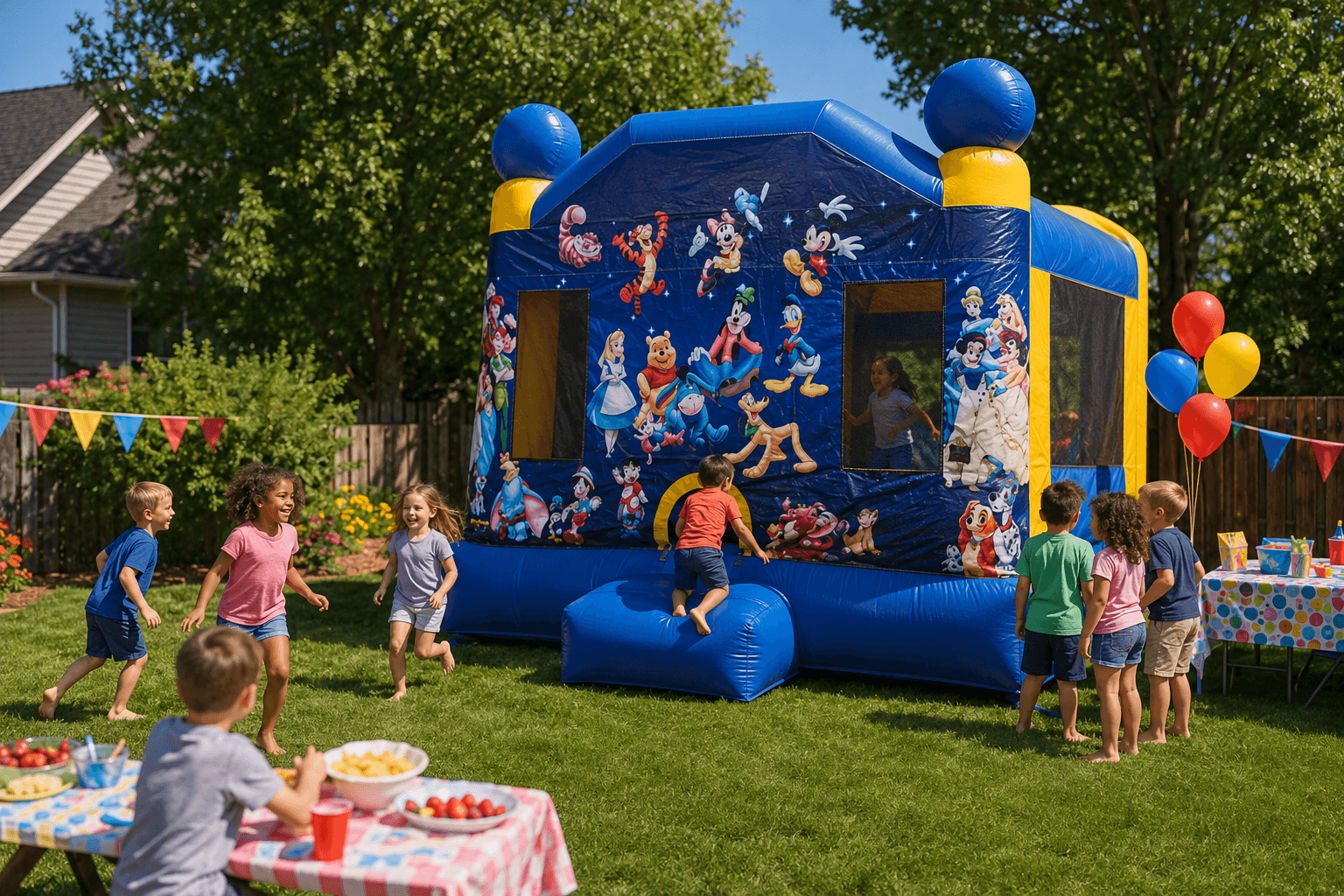
Decorations serve a purpose—they create atmosphere and signal that something special is happening. But they function as background context, not the main event. The parents notice the balloon arch. The kids notice whether they’re bored or having fun.
💡 Planning Tip: Spend your budget in this ratio: 60% on activities and experiences, 25% on food, 15% on decorations. This allocation reflects what actually creates a successful party, not what looks good in planning photos.
The Four Types of Engagement That Create Lasting Memories
Not all activities create the same level of memory formation. The most memorable kids parties balance four distinct types of engagement. Understanding these categories helps you design a party that keeps every child interested, regardless of their personality or energy level.
Active Movement & Energy Release
Bounce houses, water slides, obstacle courses, relay races. This is what kids remember most vividly because it combines physical exertion with fun.
Best for: High-energy moments, party start, outdoor settings
Competitive & Team Activities
Scavenger hunts, team challenges, timed competitions. These create shared narratives and inside jokes that kids reference long after the party.
Best for: Mid-party energy, building group cohesion
Make & Take Activities
Craft stations, building challenges, decorating cookies. Kids create something tangible they can take home as a physical reminder of the experience.
Best for: Quieter kids, transitional moments, party wind-down
Unstructured Play Time
Free play with friends, exploring spaces together, making up their own games. Often overlooked but critically important for genuine enjoyment.
Best for: Building friendships, natural energy management
The ideal party includes all four types in varying proportions based on age, venue, and party length. A 2-hour party might be 40% physical play, 30% structured games, 20% creative activities, and 10% unstructured time. Adjust based on your specific situation, but include each category.
How to Structure Activities for Different Age Groups
A backyard party setup that works perfectly for 5-year-olds will bore 10-year-olds and overwhelm toddlers. Age-appropriate activity structure is the difference between engaged kids and chaos.
Ages 2-4: Toddler & Preschool
Attention Span: 5-10 minutes per activity
What Works:
- Simple bounce houses with low sides
- Sensory play stations (water table, sandbox)
- Large motor activities (ball pit, tunnels)
- Parallel play setups where kids play near but not necessarily with each other
Key Principle: Multiple stations they can rotate through independently. No complex rules. Heavy parent supervision built into the structure.
Ages 5-7: Early Elementary
Attention Span: 15-20 minutes per activity
What Works:
- Obstacle courses with mild challenges
- Simple competitive games with clear winners
- Themed activities (superhero training, princess quests)
- Make-and-take crafts they can complete in one sitting
Key Principle: They can follow rules but need frequent activity changes. Imagination-based framing makes mundane activities exciting. Competition motivates but shouldn’t be cutthroat.
Ages 8-10: Upper Elementary
Attention Span: 20-30 minutes per activity
What Works:
- Team-based physical challenges
- Complex scavenger hunts with puzzles
- Water slide competitions and relay races
- Skill-based activities (building contests, timed challenges)
Key Principle: Strategy and skill matter. They want to feel challenged and capable. Social dynamics become important—team formation matters. They’ll self-organize more complex play if given space and equipment.
Ages 11-13: Pre-Teen & Early Teen
Attention Span: 30-45 minutes per activity (if genuinely engaged)
What Works:
- Activities that don’t feel “babyish” (obstacle courses framed as competitions, not play)
- Extended free play with equipment available
- Activities with social elements built in (team sports, group challenges)
- Experiences that feel mature (outdoor movie nights, DIY stations)
Key Principle: Less direct supervision, more autonomy. They want to hang out with friends more than participate in organized activities. Provide the space and equipment, then get out of their way. Structured moments should feel optional, not mandatory.
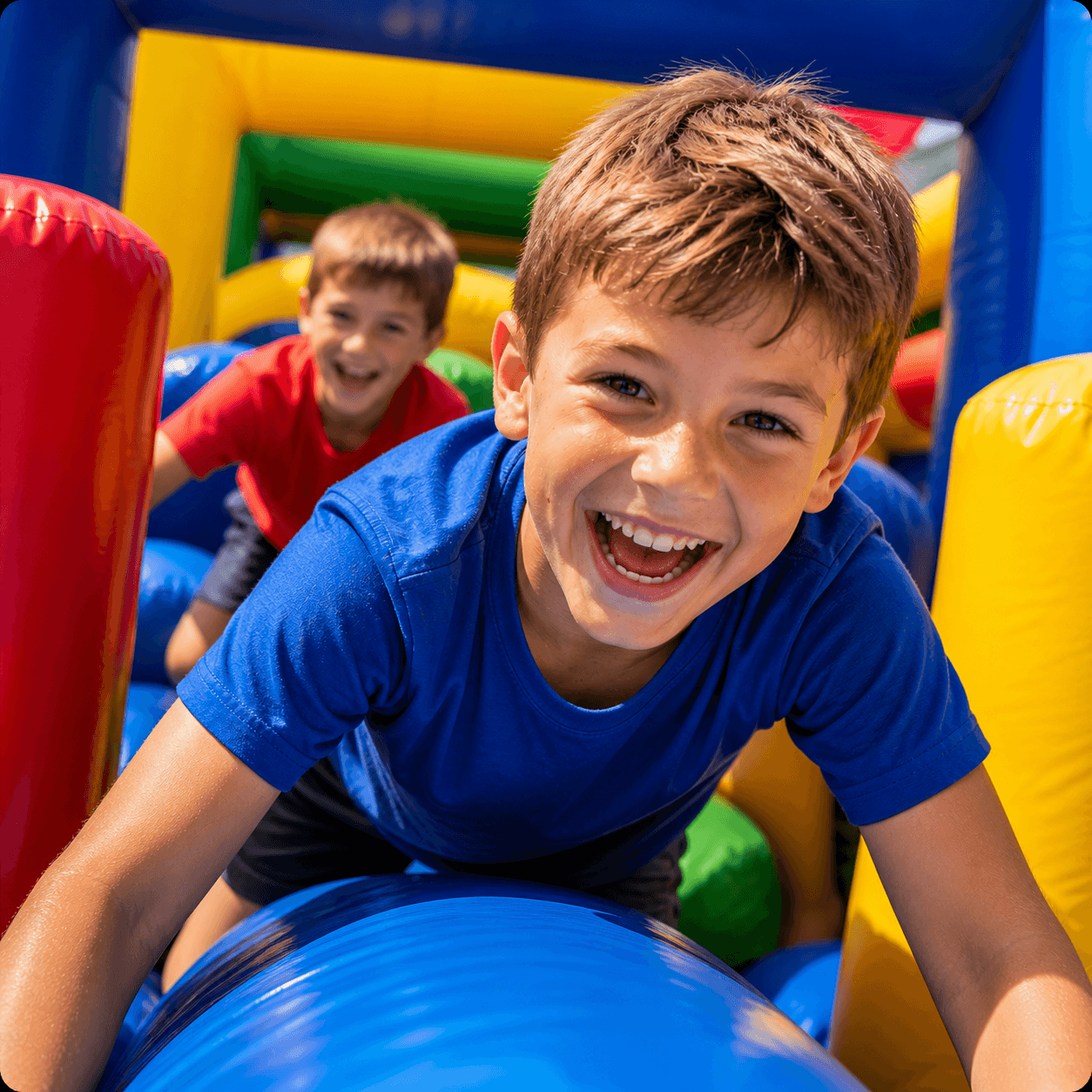
⚠️ Age-Mixing Warning: If you have a wide age range (like a 5-year-old and 10-year-old sibling party), create separate activity zones rather than trying to force everyone into the same activities. One mixed-age obstacle course works. Expecting a 10-year-old to enjoy a toddler craft doesn’t.
Managing Energy Flow Throughout the Party
Even with perfect activities, poor energy management creates problems. A well-structured party moves through predictable energy phases rather than trying to maintain one constant level of excitement.
Typical Energy Flow for a 2-3 Hour Party
Arrival & Warm-Up ↗️
Kids arrive with maximum energy and social awkwardness. Immediately direct them to a physical activity that doesn’t require a full group. A bounce house or open play zone lets early arrivals start having fun while latecomers trickle in.
Peak Energy ⚡
Everyone’s here, fully warmed up, and ready for high-engagement activities. This is when you run your most active games and challenges. Obstacle courses, relay races, water balloon fights, competitive team games. Don’t waste this window on passive activities.
Food & Transition ➡️
Natural energy drop. Serve food, do cake and presents if included. This is not wasted time—it’s necessary recovery. After eating, kids need 10-15 minutes of lower-intensity activity before ramping back up. A craft station or calmer group game works here.
Second Wind 🔄
Energy returns but not to peak levels. Return to physical activities but offer choice. Some kids want to go back to the bounce house. Others want to chill with friends. Structured options available, not mandatory. This is where having multiple activity zones pays off.
Wind Down ↘️
Signal the end with a final group activity or gathering moment. A group photo, one last game with everyone, or distributing party favors. This creates closure rather than kids just wandering off or getting picked up mid-activity. End on a high note, not exhaustion.
💡 Pro Tip: Watch the group, not the clock. If kids are deeply engaged in something, let it run longer than planned. If an activity isn’t landing, cut it short without guilt. Flexibility within structure creates the best experiences.
What Pushes Energy Too High vs What Keeps It Manageable
⬆️ Energy Escalators (Use Intentionally)
- Competitive games with prizes
- High-sugar foods and drinks
- Loud music or high stimulation
- Activities with no clear end point
- Large group chaos games (everyone running simultaneously)
⬇️ Energy Modulators (Use to Regain Control)
- Turn-based games (waiting teaches patience)
- Seated activities or quiet challenges
- Individual tasks with visible progress
- Clear start and end signals
- Small group rotations instead of all kids doing one thing
Both categories are tools, not good or bad. Strategic party planning uses escalators during high-energy windows and modulators during transitions. Problems occur when you unintentionally escalate energy during a moment that needs modulation (like right before parents arrive for pickup).
The Biggest Planning Mistakes (And How to Avoid Them)
Even experienced parents make these errors. Recognizing them early in planning prevents last-minute scrambling and disappointed kids.

🚩 Red Flags That Your Party Plan Needs Adjustment
🚩 Your timeline has no buffer time
If every minute is scheduled, you have zero flexibility when something runs long or flops. Build in 15-20% unscheduled time.
🚩 You have one big activity and nothing else
A bounce house is great for 45 minutes. Then what? Always have 2-3 backup activities even if you don’t think you’ll need them. You will.
🚩 Every activity requires adult facilitation
You’ll be exhausted and kids will be waiting around. Include self-directed options that don’t need constant supervision. Read more about common party setup mistakes to avoid.
🚩 Your budget is 80% decorations, 20% activities
Flip that ratio. Kids don’t care about Pinterest-perfect aesthetics. They care whether they had fun.
🚩 You’re planning the party you would have wanted as a kid
Your child is not you. Their interests, energy level, and social preferences might be completely different. Plan for who they actually are.
🚩 You haven’t considered weather contingencies
For outdoor parties, always have a Plan B. A tent, garage space, or indoor activities ready to deploy. Weather doesn’t care about your Pinterest board.
The Most Common Timing Mistake
Starting cake and presents too early. Parents often panic when kids are having intense fun and force them to stop for cake “because it’s on the schedule.” This kills momentum and creates resistance.
Better approach: Use food as an energy reset, not an interruption. When you notice energy starting to flag or kids needing a break—that’s when you bring out cake. It becomes a welcome pause rather than an annoying interruption.
How Professionals Think About Party Success
People who run parties professionally—event planners, party rental companies, kids activity coordinators—measure success differently than individual parents. Understanding their framework helps you plan better.
Professional Success Metric: “Did kids stay engaged without constant adult intervention, and did parents feel the party ran smoothly?”
Amateur Success Metric: “Did everything look perfect and go exactly as planned?”
The professional metric focuses on outcomes and experience. The amateur metric focuses on control and aesthetics. One creates memorable parties. The other creates stress.
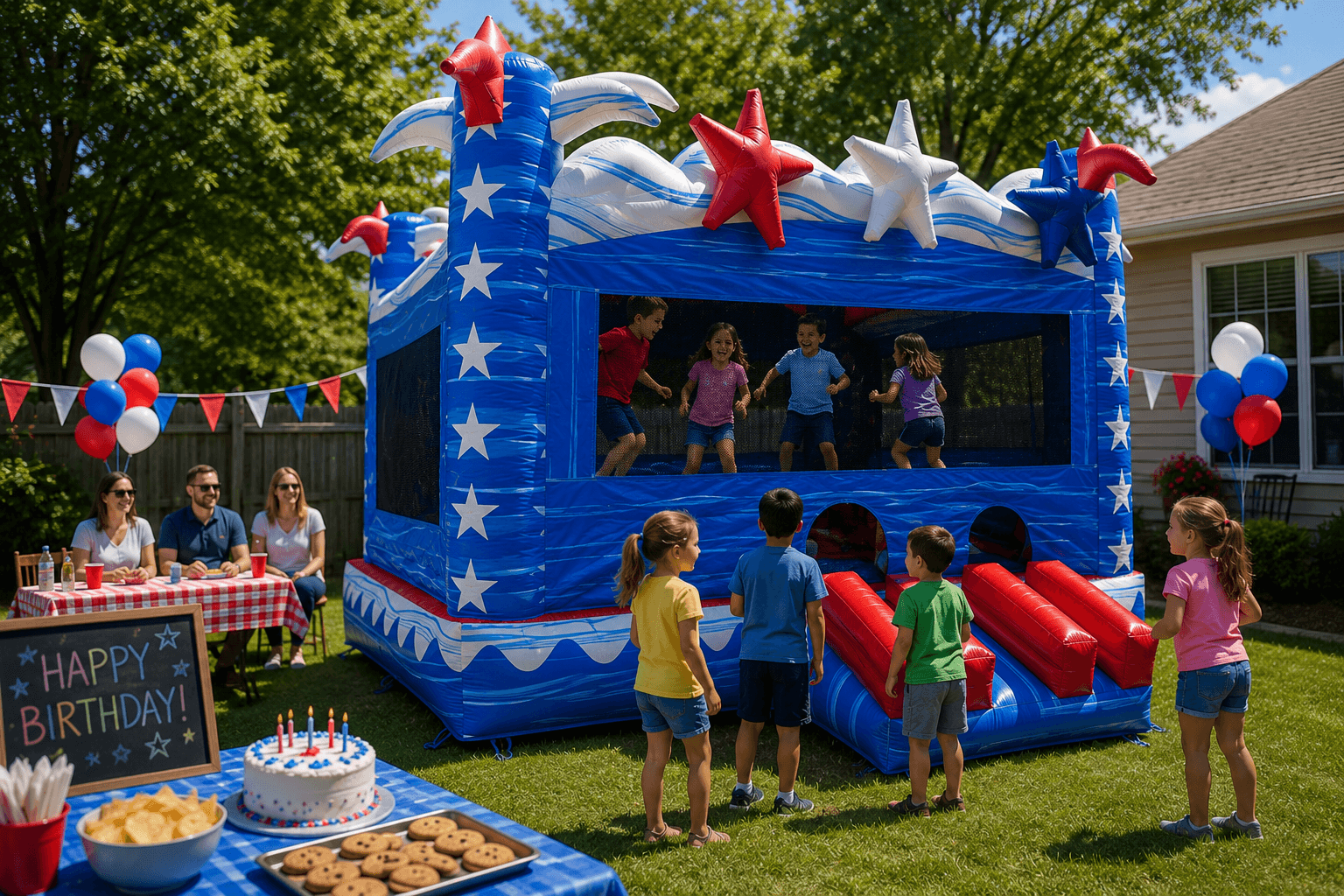
Professionals also know that safety and engagement aren’t trade-offs—they’re complementary. A well-supervised bounce house is both safer and more fun than kids wandering unsupervised. Clear activity boundaries reduce injuries and increase enjoyment because kids can fully commit without hesitation.
The Three Questions That Predict Party Success
Before finalizing any party plan, experienced planners ask these three questions. If the answer to any is “no” or “maybe,” they adjust.
1. Can kids self-direct for at least 30% of the party?
If every minute requires adult facilitation, you’ll be exhausted and kids will spend too much time waiting. Self-directed options—bounce houses, craft stations, free play zones—give everyone breathing room.
2. Does the plan accommodate different energy levels and personalities?
Not every kid wants to be in constant motion. Not every kid wants to sit quietly. A good party has options for both high-energy and lower-energy engagement happening simultaneously.
3. What happens if your main activity fails or finishes early?
The bounce house deflates. The scavenger hunt ends in 10 minutes instead of 30. Rain forces everyone inside. You need backup options you can deploy without panic. Always have one more activity prepared than you think you’ll need.
Frequently Asked Questions
What makes a kids party memorable besides decorations?
The most memorable kids parties focus on experiences rather than just decorations. Active engagement, hands-on activities, and moments where kids feel genuinely excited create lasting memories. While decorations set a visual tone, it’s the interactive elements—games, challenges, physical play, and shared experiences—that kids talk about weeks later. The key is giving children something to do, not just something to look at.
How do you keep kids engaged at a party for several hours?
Structure the party with a variety of activities that involve different energy levels. Start with high-energy physical activities like bounce houses or obstacle courses when kids first arrive and have maximum energy. Follow with structured games or activities in the middle section. End with calmer options like crafts or a group activity. Rotating between different types of engagement prevents boredom and keeps all personality types interested throughout the event.
What’s the ideal mix of activities for a 2-3 hour kids party?
A balanced 2-3 hour party typically includes 30-40% physical play (bounce houses, water slides, or active games), 20-30% structured activities (scavenger hunts, team challenges), 15-20% creative elements (craft stations, building activities), and 15-20% for food and downtime. This mix accommodates different energy levels and keeps kids engaged without overwhelming them. The exact percentages shift based on age group and weather conditions.
Do experience-based parties work for all age groups?
Yes, but the type of experience changes dramatically with age. Toddlers (2-4) need simple, sensory-rich activities with clear boundaries. Elementary age kids (5-10) thrive with competitive games, physical challenges, and imaginative play. Pre-teens (11-13) prefer team-based activities, skill challenges, and experiences that feel mature. The core principle—engagement over decoration—works at every age, but execution must match developmental stage and social dynamics.
How many activities should you plan for a kids party?
Plan for one more activity than you think you’ll need. For a 2-hour party, prepare 4-5 distinct activities or stations. For 3 hours, aim for 6-7 options. Not every activity needs to be scheduled—having backup options prevents dead time if something finishes early or doesn’t land well with the group. Self-directed stations like bounce houses or craft tables can run continuously while you rotate through structured games and activities.
What’s the biggest mistake parents make planning kids parties?
The most common mistake is over-planning the visual details while under-planning the actual activities. Parents spend hours on decorations, coordinating colors, and Pinterest-perfect setups, then realize 20 minutes into the party that kids are bored. Children don’t notice matching napkins or themed banners—they notice whether they’re having fun. Spending 70% of planning energy on what kids will do and 30% on how it looks creates far better outcomes than the reverse.
Ready to Create a Party Kids Will Actually Remember?
Browse rentals that create experiences, not just decorations. No pressure, no pitch—just options that give kids something genuinely fun to do.
Browse RentalsQuestions about what works for your space or age group? Call 901-235-3474 — we help plan parties every week.