
You’ve decided to add entertainment to your party, but now you’re staring at a rental site wondering which option actually makes sense for your event. The bounce house looks fun, but so does that obstacle course. And what about water slides on a hot day?
Each entertainment type serves different purposes and works better in specific situations. The right choice depends on your space, the age range of your guests, weather conditions, and how long you need to keep everyone engaged.
This guide walks you through the main entertainment categories, explains what each does best, and helps you match the right option to your event without second-guessing your decision.
What You’ll Learn
- Main Categories of Party Entertainment
- Which Type of Party Are You Planning?
- When Bounce Houses Work Best
- Interactive Inflatable Games and Obstacle Courses
- Water Slides and Water-Based Entertainment
- Combining Multiple Entertainment Options
- Space Requirements and Safety Considerations
- Common Questions About Party Entertainment
Which Type of Party Are You Planning?
Backyard Birthday Party
You’re hosting 10-20 kids in your backyard for 2-3 hours. You need something that keeps them busy while you handle food and cake.
Best fit: Single bounce house or combo unit with slide. Easy setup, consistent engagement, fits most yards.
Mixed-Age Family Event
You have toddlers, elementary kids, tweens, and maybe teenagers all showing up. One activity won’t work for everyone.
Best fit: Obstacle course or interactive games that scale to different ages, plus smaller bounce area for littles.
Hot Summer Day Party
Temperature’s pushing 85°F+. Kids will overheat quickly in a dry bounce house. You need cooling options built in.
Best fit: Water slide or wet/dry combo. Keeps everyone cool, adds splash excitement, and extends play time.
Main Categories of Party Entertainment
Party entertainment for kids falls into four main categories, each designed around different play patterns and energy levels.
Bounce Houses
Open jumping areas focused on high-energy burn. Kids jump, flip, and bounce without rules or structure. Best for ages 3-8 and shorter parties.
Inflatable Games
Obstacle courses, sports challenges, and interactive units with goals. Kids compete, race, and problem-solve. Works for ages 5-14 and longer events.
Water Slides
Slides with splash pools or slip-and-slide lanes. Combines thrill with cooling relief. Essential for hot weather, works best for ages 6+.
Carnival & Lawn Games
Lower-energy options like ring toss, cornhole, giant Jenga. Offers breaks between active play and includes all ages and abilities.
Most parties benefit from one primary entertainment piece (bounce house, obstacle course, or water slide) rather than trying to offer everything. Focus on what matches your space, weather, and guest ages.
When Bounce Houses Work Best
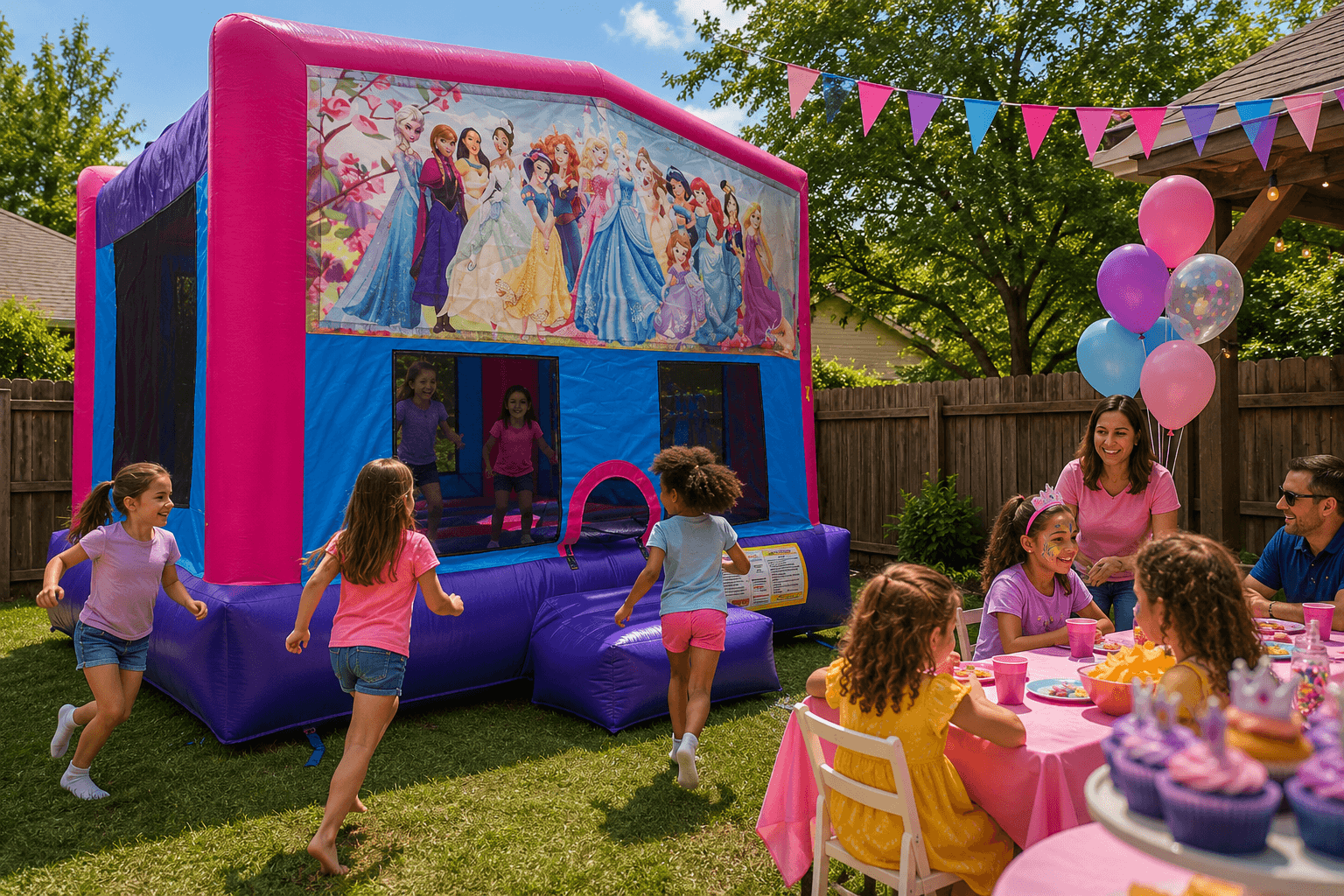
Bounce houses excel at one thing: burning off energy fast. Kids jump in, start bouncing immediately, and wear themselves out through unstructured play.
This simplicity makes them perfect for younger children (ages 3-8) who don’t need complex activities to stay engaged. No rules to explain, no turns to manage, no competition to referee. Just jump and play.
Ideal Situations for Standard Bounce Houses
- Birthday parties for kids under 8: Simple, high-energy fun that doesn’t require skill or coordination
- Smaller backyard spaces: Standard units fit 15×15 foot areas with clearance
- 2-3 hour events: Kids rotate through naturally without losing interest
- Same-age groups: When everyone’s at similar developmental levels and play styles
- Budget-conscious parents: Typically the most affordable rental option
💡 Pro Tip
If your party includes both toddlers and elementary kids, consider a combo unit with a bounce area AND a small slide. It gives older kids something extra to do when pure bouncing gets repetitive. Learn more in our backyard party setup guide.
When Bounce Houses Fall Short
Older kids (9+) often get bored after 20-30 minutes of bouncing. There’s no challenge, no goal, no competition. They’ll jump for a bit, then drift away to their phones or other activities.
Bounce houses also struggle in hot weather. The enclosed jumping area traps heat, and kids overheat quickly when they’re exerting energy without water to cool down. If your party falls in June through August, consider water-based options instead.
For safety guidelines and supervision tips, check the specific requirements for your rental.
Interactive Inflatable Games and Obstacle Courses

Where bounce houses offer open play, inflatable games add structure, goals, and competition. Kids climb, race, navigate obstacles, and challenge each other instead of just jumping.
This shift changes who stays engaged and for how long. Older kids don’t lose interest because there’s always another round to race, another friend to beat, another obstacle to master.
Types of Interactive Inflatable Games
Obstacle Courses
Multi-stage challenges with climbing walls, tunnels, squeeze-throughs, and pop-up barriers. Kids race side-by-side or time themselves.
Best for: Ages 6-14, competitive kids, longer parties (3+ hours)
Sports Challenges
Basketball shootouts, soccer goals, jousting arenas. Familiar sports converted to inflatable play with built-in scoring.
Best for: Sports-loving kids, team competitions, mixed ages
Interactive Combo Units
Bounce area + slide + basketball hoop or climbing section. Offers variety within one rental footprint.
Best for: Mixed-age groups, smaller spaces, budget-conscious variety
Space and Setup Considerations
Obstacle courses require significantly more space than bounce houses — typically 30-50 feet in length. Measure your yard’s longest clear dimension before committing to an obstacle course rental.
You also need a clear path for setup — rental companies can’t navigate tight gates or sharp corners with long inflatables. If your backyard access is limited, combo units pack more features into a smaller footprint.
⚠️ Keep in Mind
Interactive games need active supervision. Unlike open bounce houses where kids self-manage, obstacle courses require someone watching starts/stops, enforcing one-direction flow, and preventing pileups at challenge points.
Water Slides and Water-Based Entertainment
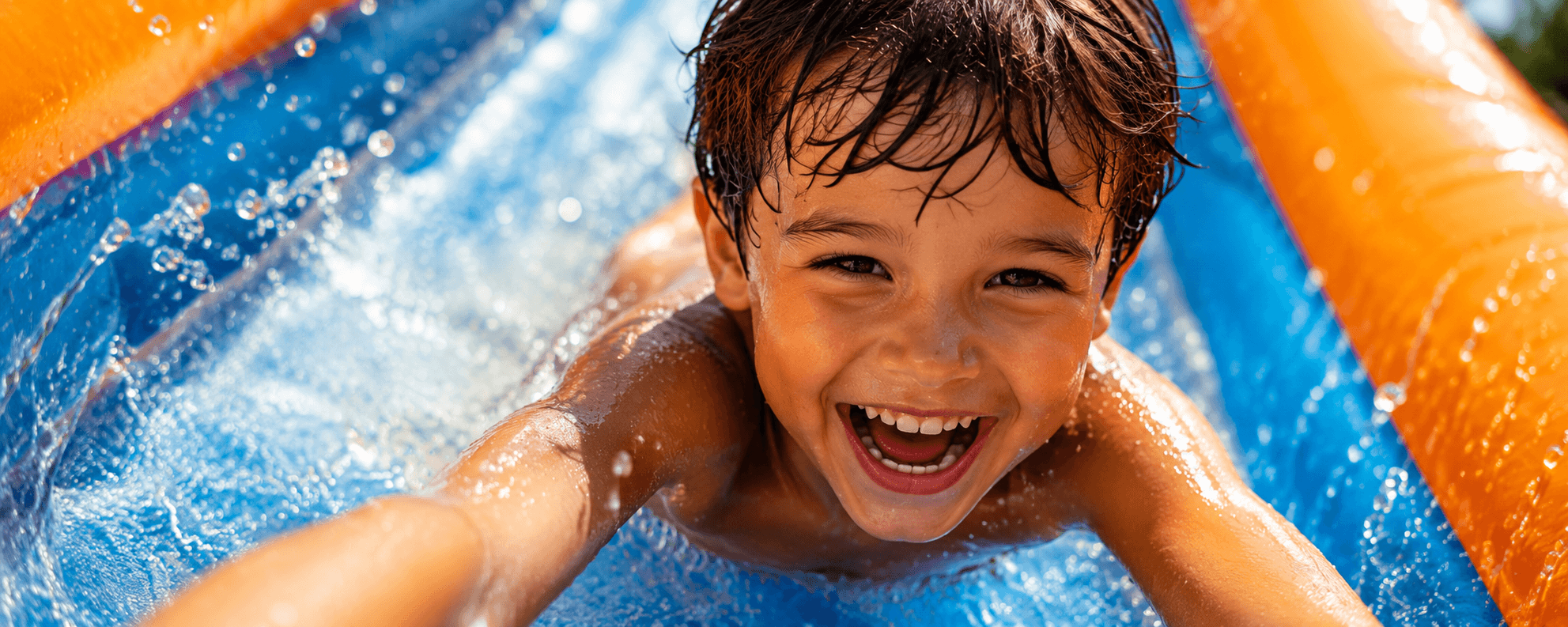
When the temperature climbs above 80°F, water slides transform from “nice option” to “only option that makes sense.” Kids stay cool, parents stay sane, and everyone plays longer without overheating.
Water slides combine the thrill of sliding with the relief of cooling water. The slide itself becomes the attraction — kids line up for repeated turns instead of bouncing aimlessly.
When Water Slides Make the Most Sense
- Summer parties from June through August: Essential when heat index exceeds 85°F
- Afternoon events (noon-4pm): Peak sun hours demand cooling relief
- Active kids ages 6+: Old enough to climb stairs safely, young enough to repeat endlessly
- Longer parties (3-4 hours): Water play sustains interest better than dry activities in heat
- Yards with water access: You need a hose hookup and continuous water supply
Our complete water slide rental guide covers setup requirements, safety rules, and what to expect on event day.
⚠️ Water Slide Requirements
- Water hookup (garden hose) within 50 feet
- Flat, level ground — no slopes or dips
- 25-35 feet length clearance minimum
- Adult supervision at all times (no exceptions)
- Increased water bill (plan for 2-4 hours running)
- Kids must bring swimsuits and towels
✓ Water Slide Benefits
- Keeps kids cool in extreme heat
- Extends outdoor play time significantly
- Built-in line system (climb, slide, repeat)
- High re-ride appeal — less boredom
- Works for wide age range (6-14+)
- Creates memorable “splash” moments
Wet/Dry Combo Options
Can’t decide between a bounce house and water slide? Wet/dry combo units work both ways — use them dry in spring/fall or add water for summer heat.
This flexibility helps if weather’s uncertain or if your party falls during a temperature swing week. Set it up dry, then add water if the day heats up more than expected.
For more summer party strategy, see our summer planning checklist and water slide party tips.
Combining Multiple Entertainment Options
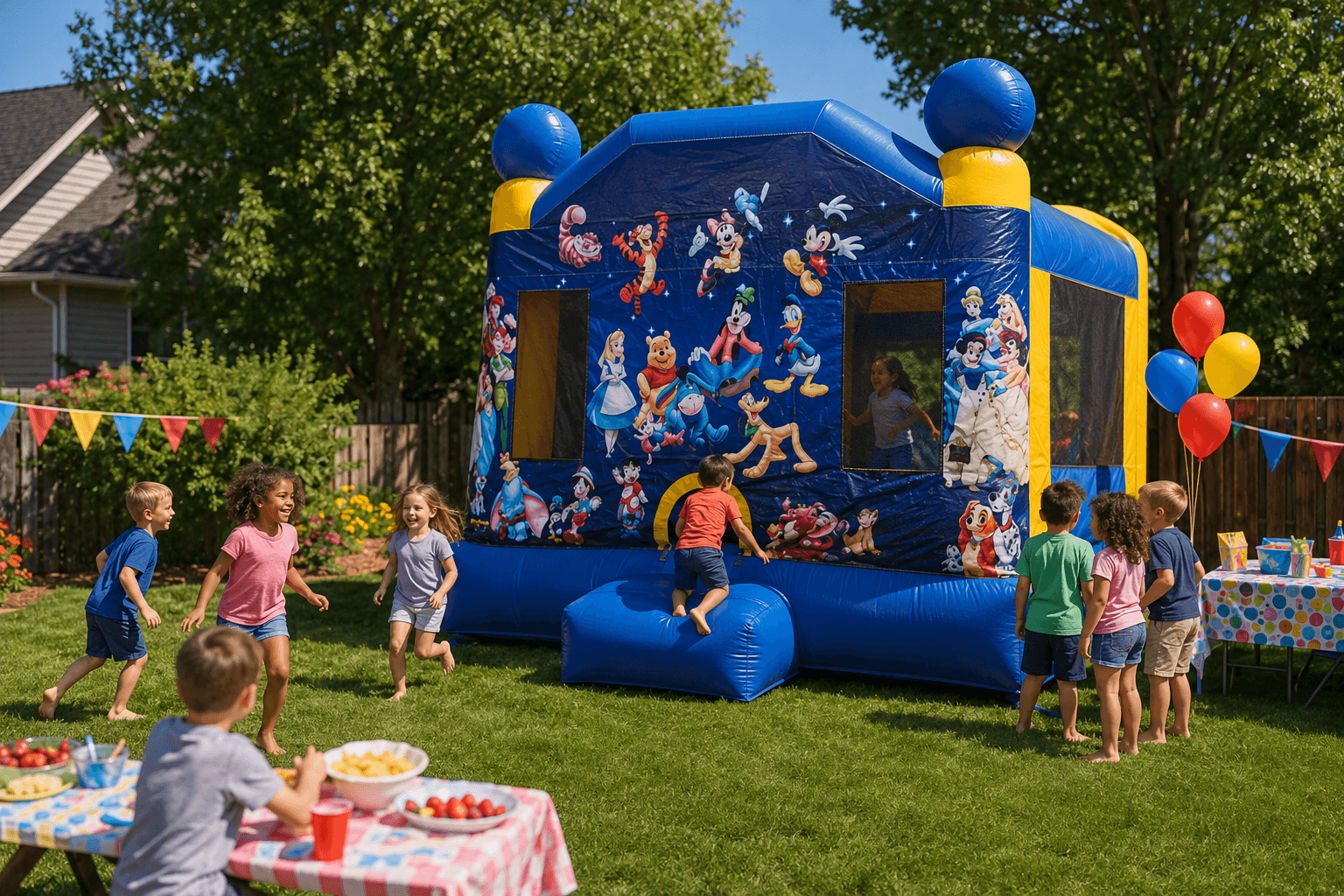
One major entertainment piece usually handles most parties. But longer events, larger groups, or wide age ranges sometimes need variety to keep everyone engaged throughout the whole timeframe.
Mixing entertainment types works when each serves a different purpose or age group. The key is strategic pairing — not just renting everything available.
Smart Entertainment Combinations
Age-Split Strategy
Small bounce house + obstacle course
Toddlers/young kids use the bounce area. Elementary and older kids gravitate to the challenge course. Each group stays engaged without competing for the same space.
Active + Calm Mix
Water slide + carnival games
Kids rotate between high-energy sliding and lower-key games. Provides natural cooldown periods and prevents overstimulation from 3 straight hours of water chaos.
Evening Extension
Inflatable + movie screen
Daytime active play transitions to evening movie under the stars. Perfect for birthday sleepovers or graduation parties that run late. See our guide to backyard movie nights.
💡 Budget Reality Check
Multiple rentals stack costs quickly. Before committing to two inflatables, ask yourself: Will kids actually use both, or will one dominate the whole party? Often, one great option beats two mediocre ones competing for attention.
When NOT to Mix Entertainment
Skip multiple options if:
- Your party runs 2 hours or less: Not enough time to justify multiple setups
- You have 10 or fewer kids: Small groups stick together — one activity keeps everyone happy
- Your yard can’t physically fit two inflatables safely: Cramped spacing creates safety hazards
- You’re already stretching budget: Better to get one quality rental than two budget compromises
Most families get better results from one excellent centerpiece than spreading attention across multiple mediocre options. Check out memorable party ideas that focus on quality over quantity.
Space Requirements and Safety Considerations

The entertainment that looks perfect online might not fit your actual yard. Before you commit to any rental, measure your space and check for obstacles.
Every inflatable needs clearance on all sides for safety, anchoring, and airflow. Skimp on spacing and you risk tipping hazards, restricted exits, or units too close to fences and structures.
Minimum Space Requirements by Type
| Entertainment Type | Footprint Size | Total Space Needed | Overhead Clearance |
|---|---|---|---|
| Standard Bounce House | 13×13 feet | 15×15 feet minimum | 15 feet |
| Combo Unit (bounce + slide) | 15×20 feet | 18×23 feet minimum | 18 feet |
| Obstacle Course | 10×30-40 feet | 13×35-45 feet minimum | 15 feet |
| Water Slide | 12×25-30 feet | 15×30-35 feet minimum | 18-20 feet |
Always add 3 feet on all sides beyond the unit’s actual footprint. This clearance allows for safe anchoring, prevents kids from running into obstacles, and gives the blower room to function properly.
What to Check Before Booking
🚩 Red Flags That Stop Setup
- Power lines overhead: Most inflatables need 15+ feet clearance — zero exceptions
- Low-hanging tree branches: Will damage the unit and void insurance
- Sloped or uneven ground: Creates tipping hazards and uneven jumping surfaces
- Sprinkler heads in setup zone: Get punctured when stakes go in
- Underground utilities in stake path: Call 811 before digging stakes if unsure
- Gates too narrow for delivery: Can’t get 6-foot-wide units through 4-foot gates
Rental companies will cancel setup if they arrive and find unsafe conditions. Avoid day-of cancellations by checking your space thoroughly during booking. Our common party setup mistakes guide covers what to watch for.
Supervision Requirements for Different Entertainment Types
Not all entertainment needs the same level of watching. Water slides require constant eyes-on supervision. Bounce houses can handle brief check-ins while you’re handling food.
- Water slides: Dedicated adult watching entry/exit at all times — no multitasking
- Obstacle courses: Adult monitoring flow, preventing pileups, managing competitive play
- Bounce houses: Regular check-ins (every 5-10 minutes), enforce age/size groupings
- Carnival games: Minimal supervision once rules are explained
Factor supervision needs into your entertainment choice. If you’re solo-hosting and handling all party logistics, pick lower-maintenance options. Save water slides and obstacle courses for when you have co-host help.
Common Questions About Party Entertainment
What’s the difference between a bounce house and an inflatable game?+
Bounce houses are open jumping areas focused on free play and energy release, ideal for younger children. Inflatable games like obstacle courses or sports challenges introduce structured competition and goal-oriented play, better suited for older kids and mixed-age groups. Bounce houses work for short bursts of activity. Games sustain engagement over longer periods through challenge variety.
How do I know which entertainment fits my party space?+
Measure your space and add 3 feet clearance on all sides for safety. Bounce houses typically need 15×15 feet minimum. Obstacle courses require 30-40 feet length. Water slides need flat ground and water access. Check for overhead clearance — power lines and tree branches within 15 feet create safety hazards that prevent setup. Walk your yard with a tape measure before booking anything.
Can you mix different types of entertainment at one party?+
Yes, mixing entertainment types works well for longer parties or mixed-age groups. Pair a bounce house for younger kids with an inflatable game for older children, or add carnival games for downtime between active play. Just ensure you have adequate space and supervision for each area. Most parties under 3 hours do fine with one quality option rather than multiple mediocre ones competing for attention.
What entertainment keeps kids engaged the longest?+
Obstacle courses and interactive games typically hold attention longer because they offer challenge and variety. Water slides excel during hot weather — the cooling factor extends play time significantly. Bounce houses work best for shorter bursts of high-energy play. For 3+ hour parties, variety beats any single option. Consider one major interactive piece plus lower-key activities for breaks.
How much space do different party entertainment options need?+
Standard bounce houses need 15×15 feet. Combo units with slides require 20×15 feet. Obstacle courses range from 30-50 feet long by 10-12 feet wide. Water slides need 25-35 feet length. Always add 3 feet safety clearance on all sides and check for 15+ feet overhead clearance for power lines and branches. Measure your actual space before browsing rentals to avoid disappointment on party day.
What entertainment works best for mixed age groups?+
Obstacle courses and interactive inflatable games adapt well to different ages and skill levels. Combo units with both bounce areas and slides offer options for various ages in one rental. Carnival games and lawn activities provide breaks from high-energy play and include everyone from toddlers to adults. Avoid single-purpose bounce houses when your guest list spans more than 4-5 years in age range.
Ready to Plan Your Party?
Browse our full entertainment selection and see what fits your space, age group, and party style. No pressure, no pitch — just options that actually work.
Browse RentalsQuestions about what works for your event? Call 901-235-3474 — we’ll help you figure it out.